PIMdesk
A product information management tool for Shopify merchants. We inherited a buggy, slow codebase and rebuilt it into something modern and fast.
Visit pimdesk.com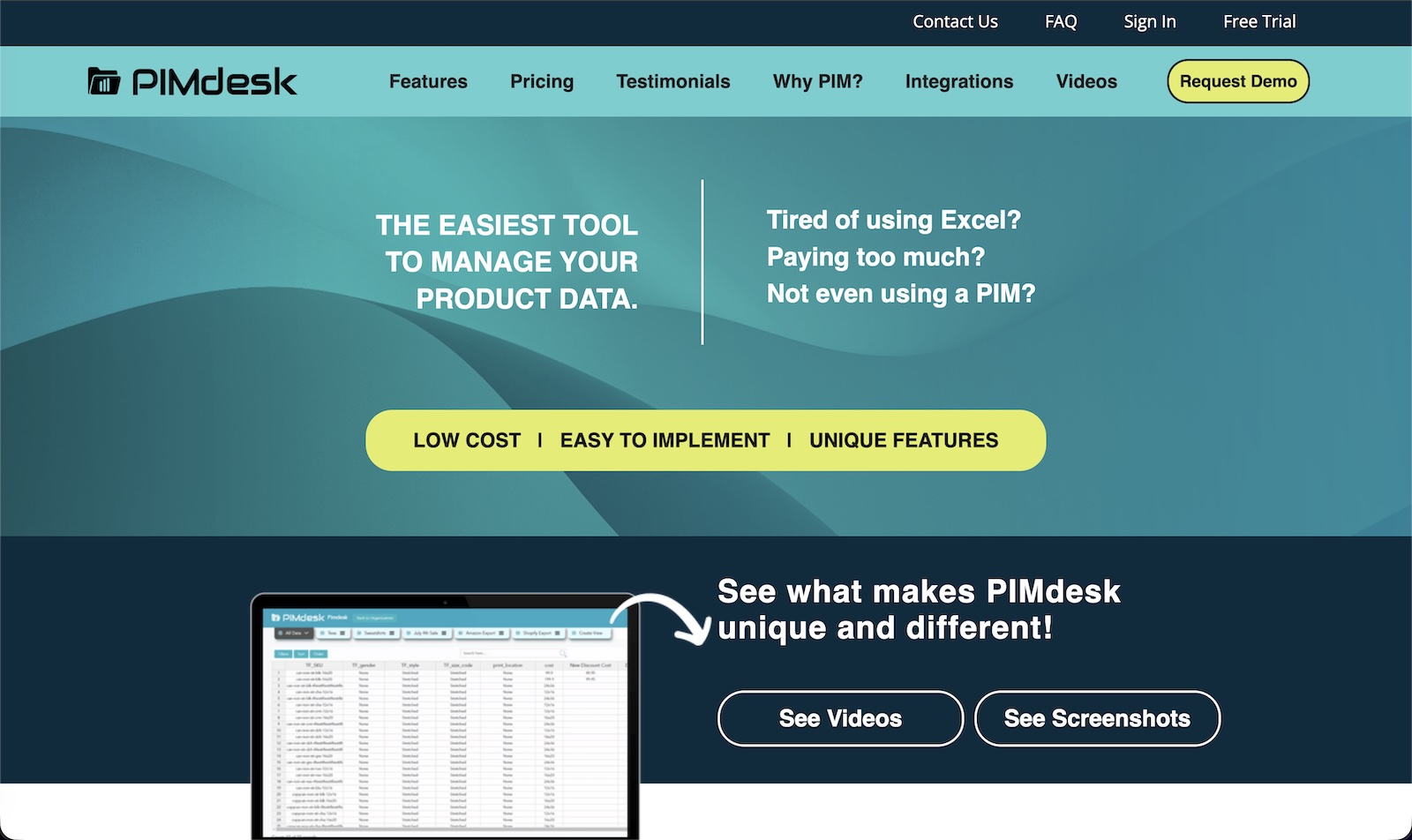




Overview
Product data, without the enterprise price tag.
PIMdesk is a product information management tool for merchants whose catalogue has outgrown spreadsheets but does not justify enterprise PIM. It pulls product data from suppliers and Shopify into one place, lets a team edit it in bulk, and pushes the corrected version back out to the storefront.
We did not start this one. We inherited a poorly built product — buggy and slow — and rebuilt it into something modern and fast.
The challenge
A codebase working against its own use case.
The product's whole promise is handling a catalogue too large to manage by hand, and that was exactly where the inherited code fell over. The interface slowed to a crawl on the catalogue sizes real customers had, and bugs surfaced in the operations they ran most.
Rewriting from zero was not on the table — there were paying customers with live data. The work had to happen underneath a running product.
The solution
Rebuilt in place, a layer at a time.
We reshaped the backend into a clean Rails API and built a new Vue 3 single-page app against it, moving the interface across piece by piece rather than in one cutover. The spreadsheet-style editing grid was the first thing rebuilt, and the one held to the hardest performance standard: it has to stay responsive on catalogues with tens of thousands of rows.
Underneath, we straightened out the Shopify integration so catalogues sync both ways without drift, and reworked import and export around templates a merchant can map to each supplier's feed format once and reuse.
Working on someone else's live data demanded a safety net, so we added snapshots and a full audit trail. Every change to a product is attributed and reversible, which makes a bad bulk edit an inconvenience rather than an incident.
Outcome
Modern, and quick where it counts.
PIMdesk now behaves the way its pitch always claimed — bulk operations that stay responsive at scale, on a stack that can be maintained and extended. We have been building on it since 2023.